Why Does My Dog Sit on Me?
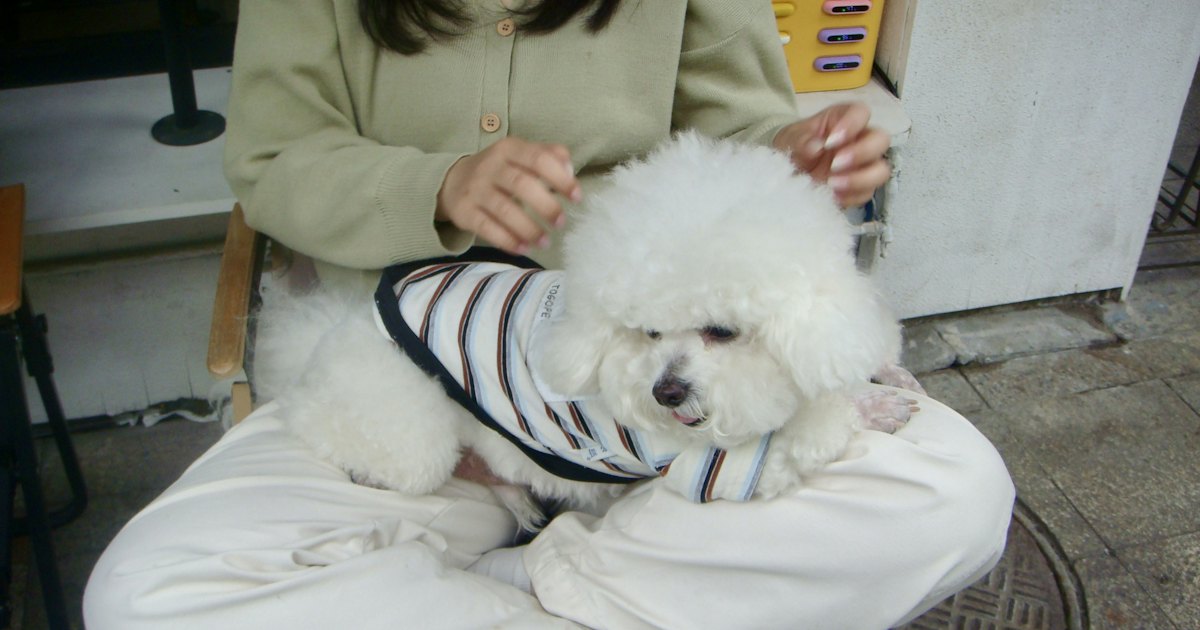
Dogs sit on you because it's the easiest way to stay close, borrow your body heat, and mark you as theirs for a moment. That's usually affection, not dominance. Sometimes it signals something else, like guarding, learned attention-seeking, or mild separation anxiety, depending on when and how it happens.
On this page
This usually starts the moment you sit down. It rarely starts the moment you walk in the door. A dog that waits for you to settle, then climbs onto your lap, is reading your posture. It isn't just reacting to your voice. People often call it their dog "claiming a seat." That description is closer to the truth than it sounds.
Dog Translator
What if you answered
in his own language?
Dog Translator turns what you say into barks and meows on your iPhone.
Dog & Cat Translator Pro
5.03+ ratingsFree


The 30-Second Test
Run through this quick check before deciding what the behavior means.
- Happens after you sit down, and your dog relaxes once in place: ordinary affection-seeking.
- Happens the instant you stand up, with pacing or whining if you step away: possibly separation anxiety instead.
- Comes with a stiff body, facing the door or another pet: more likely guarding than cuddling.
- Shows up right when you pick up your phone or a book: often learned attention-seeking, not instinct.
For the fuller picture, check it against how to read dog body language — posture and ear position often say more than the sitting itself.
Fix 1: Separate Everyday Affection From a Clingy Change
Most dogs that sit on their owner are simply affectionate. That habit rarely needs fixing.
Watch for a change in the pattern instead of the habit itself. A dog that suddenly sits on you far more than before may be anxious, not just close. The same goes for a dog that struggles the moment you leave the room.
Some dogs that sit on you during the day also sleep wedged between your legs at night. That's a related habit, but it isn't the same job. Sitting on you while you're both awake is usually about claiming space and contact right now. Sleeping between your legs is mostly about comfort and warmth once you're both settled for the night.
Fix 2: Check What's Happening Around the Sitting
Context tells you more than the behavior on its own. Notice who else is in the room. Notice what just happened, and where your dog chooses to sit.
A dog that only sits on you when another pet or stranger is nearby is probably guarding, not cuddling. A dog that does it at random times, even when you're alone, is more likely seeking plain comfort.
Body language fills in the rest. A loose, relaxed posture lines up with happy dog body language. A stiff posture, tucked tail, or flattened ears point toward stressed dog body language instead — and that changes what the sitting actually means.
Dog Translator
Still reading the signs?
Next time your dog vocalises, open Dog Translator and tap a reply. Free on iPhone, iOS 16 or newer.
Dog & Cat Translator Pro
5.03+ ratingsFree
Fix 3: Decide Whether to Encourage It or Redirect It
There's no single right answer here. It depends on your dog, and on your space. Encouraging it is fine if it stays comfortable for you and calm for your dog.
Redirecting makes more sense in a few specific cases.
- Your dog is large, and the full weight gets uncomfortable over time.
- The sitting happens at inconvenient moments, like mid-meal or mid-call.
- It's tied to guarding a space or a person, not plain affection.
To redirect gently, reward your dog for settling on a mat next to you, not on top of you. Keep the reward close to the moment your dog chooses the mat, not minutes later. Avoid pushing your dog off sharply — that can read as rejection, and it tends to increase clinginess instead of easing it.
Fix 4: Give the Instinct a Playful Outlet
Dogs that sit on you are often looking for a response, not just contact. Giving that instinct a lighter outlet can take some pressure off a long cuddle session.
Dog & Cat Translator Pro is a free iOS app, and a $9.99-a-year subscription unlocks the main features. Speak a phrase like "do you want to play?" into your iPhone. It plays the words back as a bark, growl, or whimper, matched to a breed profile such as husky, beagle, or golden retriever.
It's a short, playful back-and-forth between cuddle sessions. It won't tell you why your specific dog sits on you — that answer comes from watching context, not a sound effect.
Fix 5: Know When Sitting-On-You Behavior Needs a Professional Look
Ordinary affection-seeking doesn't need a vet or a trainer.
A few patterns are worth a second opinion. Talk to a vet if sudden clinginess shows up with no clear cause. Pain or discomfort can push a dog to stay unusually close. Talk to a certified trainer if the sitting comes with whining, destructive behavior, or panic once you're out of sight. That combination points toward separation anxiety, not simple closeness.
Dog Translator
One more thing to try tonight
Read the signal, then answer it. Dog Translator plays a bark or meow back when you speak or tap — free on iPhone, iOS 16 or newer.
Dog & Cat Translator Pro
5.03+ ratingsFree
Why Dogs Sit On You: Common Reasons Compared
A few different instincts can look almost identical from the couch.
| Reason | What It Usually Looks Like | What Helps |
|---|---|---|
| Comfort and warmth seeking | Leans in during quiet moments, picks the warmest spot nearby | Usually nothing — it's ordinary affection |
| Guarding instinct | Sits facing the door or another pet, body a little stiff | Give your dog a job, like settling on a mat nearby instead |
| Separation anxiety | Follows room to room, sits on you even seconds after you stand | Needs a different plan; a certified trainer can help if it persists |
| Learned attention-seeking | Shows up right when you pick up a phone or sit at a desk | Reward calm settling nearby instead of climbing up |
Frequently Asked Questions
Why does my dog sit on my feet?
Dogs sit on your feet mostly for warmth and closeness, the same instinct behind sitting on your lap. Feet also carry your scent strongly, which makes them an easy spot to settle near you without climbing all the way up. It's common in cooler rooms and during naps.
Why does my dog lay on me instead of sitting?
Laying on you usually means the same thing as sitting on you: comfort and closeness. Dogs switch between the two based on space and your position, not a different motive. A dog that lays across your lap on the couch is often just choosing the position that fits best at that moment.
Why does my dog always lay on me on the couch?
The couch combines warmth, a soft surface, and your attention in one spot, so it's a common place for this habit to show up. Some dogs also treat the couch as shared territory and settle on you there specifically, rather than on the floor or a dog bed nearby.
Why does my dog follow me everywhere and then sit on me?
Following you first and sitting afterward is a continuation of the same attachment behavior. Your dog tracks where you go, then settles once you stop moving. For a closer look at the following half of that pattern, see why does my dog follow me everywhere.
Is it bad for my dog to sit on me all the time?
No, sitting on you often isn't a problem by itself. It only becomes worth addressing if it's new, sudden, or paired with whining, pacing, or panic when you move away. In those cases, mild separation anxiety is more likely than simple affection.
Why does my puppy sit on me more than it used to?
Puppies often increase this behavior as they get more mobile and more attached to a specific person. It can also spike after a change at home, like a new pet or a move. Steady routines and short training sessions usually ease it as the puppy settles in.