Why Does My Dog Nibble on Me?
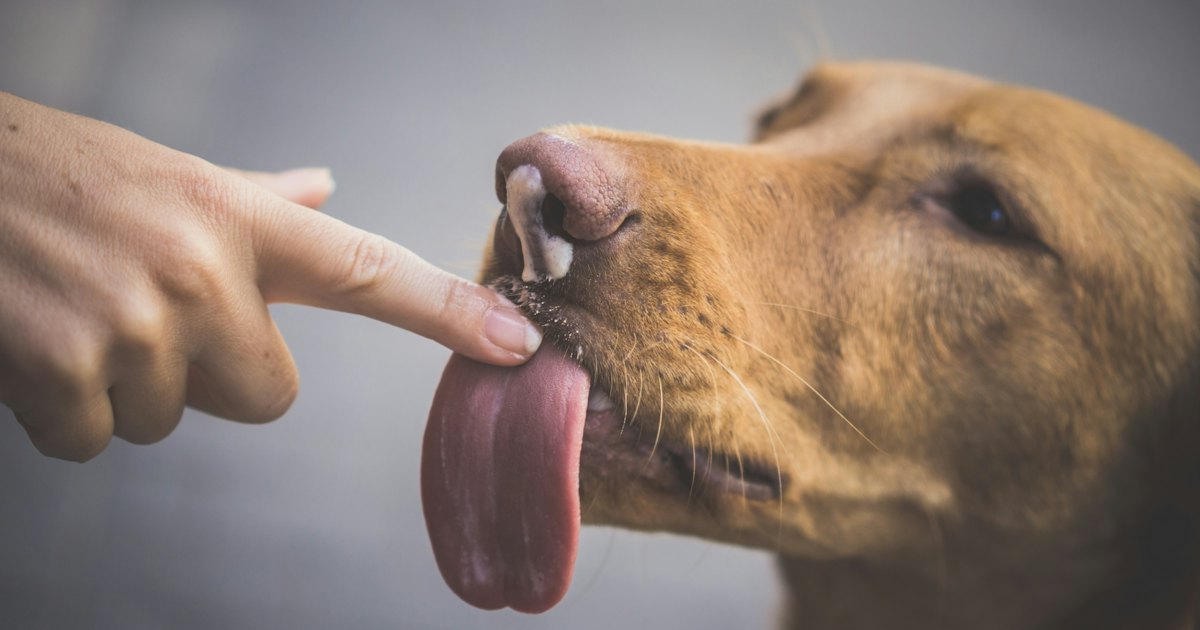
Most dogs nibble on you because gentle mouthing is their version of affection, attention, or play. It mirrors the soft nips puppies trade with littermates. A relaxed nibble with a loose, wiggly body usually means comfort, not aggression. Teething puppies nibble even more, since sore gums make chewing feel better.
On this page
Owners usually notice a pattern. The nibbling shows up during cuddle time, right before a nap, or when the dog wants something — a walk, dinner, or more attention. The mouth works like a hand here. Dogs often target ears or fingers. Those spots get the fastest reaction from you. That fast reaction keeps the habit going, even when it is not meant to hurt.
Dog Translator
What if you answered
in his own language?
Dog Translator turns what you say into barks and meows on your iPhone.
Dog & Cat Translator Pro
5.03+ ratingsFree


The 30-second Test: Affectionate Nibble or Something Else
Run this quick check before you decide how to respond.
- Loose, wiggly body and a soft mouth: usually affection or play.
- Stiff body, hard stare, and a tense mouth: back off and give space.
- Nibbling that gets harder the moment you pull away: overstimulation, not affection.
- Constant nibbling in a young puppy: normal teething, not a behavior problem.
Say the one that matches out loud, and the right next step gets easier to pick.
Method 1: Read the Body Language Clues First
A nibble never happens alone. It comes with a tail position, an ear set, and a posture, too. Together, they tell you what the dog actually feels. Soft eyes, a loose tail, and a relaxed mouth point to affection. A stiff body or a hard stare point the other way. Our guide on how to read dog body language breaks down the tail, ears, eyes, and posture. It walks through each signal one at a time.
| Type of Nibble | What It Usually Looks Like | What Helps |
|---|---|---|
| Affectionate / social | Loose body, soft mouth, slow pace | Let it happen, or redirect to a toy if it tickles too much |
| Attention-seeking | Starts when you stop petting or look at your phone | Redirect to a toy, then reward calm behavior |
| Teething puppy | Constant, aimed at hands and furniture, eases with chew toys | Offer a chew toy every time, and be patient with the phase |
| Overstimulated / play gone too far | Gets harder the more you pull away or laugh | Stop the game, turn away, and let the dog settle |
Method 2: Redirect the Nibble to a Toy or Chew
The fastest fix for a hands-on nibble is a simple swap. The moment your dog's mouth lands on your hand, offer a toy instead. The AKC's guide to puppy biting says the same thing. If a puppy nibbles at fingers or toes during play, offer a toy instead. The same swap works on adult dogs, too. Consistency is what makes it stick, not a single try.
Method 3: Teach Bite Inhibition With a Simple Sound
Bite inhibition is a real, teachable skill, not just a puppy phase. Puppies normally learn it from littermates: bite too hard, and the other puppy yelps and stops playing. That same AKC puppy-biting guide describes copying that signal with a sharp, high-pitched "ow" the instant teeth touch skin. If the sound gets your dog more worked up instead of less, stop playing and go quiet instead: turn away and tuck your hands under your arms for a few seconds, so biting gets no reaction at all. With consistent repeats, many dogs start easing off the pressure on their own.
Method 4: Give the Nibble an Outlet With Interactive Play
Sometimes a nibble is really a dog asking for interaction, not instruction. If your dog already gets plenty of structured training, the gap might just be play. Dog & Cat Translator Pro, the Dog Translator app, turns that moment into a back-and-forth game instead of a chewed sleeve. You speak a phrase, and it plays a realistic bark, whimper, or growl back, based on the breed profile you pick. To try it, open the app, pick your dog's breed, and speak something like "Are you hungry?" or "Let's play." Then listen to the sound it plays back. The app is free to download on the App Store, with a subscription that unlocks additional features. It is a toy for bonding, not a translator of real barks. It will not fix a biting problem on its own. If the nibbling is hard enough to hurt, use the training steps above instead.
Dog Translator
Still reading the signs?
Next time your dog vocalises, open Dog Translator and tap a reply. Free on iPhone, iOS 16 or newer.
Dog & Cat Translator Pro
5.03+ ratingsFree
Fix 1: When Nibbling Turns Into a Real Bite
A soft nibble and a real bite are not the same thing, and the difference matters. Watch for teeth that break skin, a stiff body before contact, or a growl that gets louder instead of quieter. Our guide on why is my dog growling breaks down what each growl type usually means. That helps you tell a nervous warning from a playful one. If the bites keep breaking skin, that is a job for a professional. A certified trainer or a veterinary behaviorist can help if pulling away and going quiet does not stop it.
Frequently Asked Questions
Why does my dog nibble on me gently?
A gentle nibble is usually a sign of affection, not aggression. Dogs explore and bond with their mouths the same way they use their nose, so a soft nibble on your hand or arm often means your dog feels relaxed around you. Watch the rest of the body — a loose tail and soft eyes confirm it is a friendly gesture, not a warning.
Is dog nibbling a sign of affection?
Yes, in most cases nibbling is a sign of affection or playfulness. It mimics the gentle mouthing dogs use with each other during grooming and play. The behavior usually shows up during calm, relaxed moments like cuddling on the couch. If the nibble comes with a stiff body or a hard stare instead, treat it as a different signal, not affection.
Why does my dog nibble my ears or fingers?
Ears and fingers get nibbled most because they get the biggest reaction from you. Dogs repeat whatever behavior earns attention, even a laugh or a quick pull-away. Fingers also move fast during play, which makes them an easy target for a mouth that is looking for something to grab. Swapping in a toy the moment it starts helps break the pattern.
How do I stop my dog from nibbling too hard?
Stop the nibbling by ending play the instant it gets too hard, and offering a toy instead of your hand. A sharp, high-pitched sound the moment teeth press down works the way a littermate's yelp would during puppyhood. Stay consistent, and the mouth usually softens with regular practice.
Is nibbling the same as play biting?
Nibbling and play biting sit on the same spectrum, just at different intensities. Nibbling is light, controlled mouthing with little or no pressure. Play biting uses more pressure and often comes with jumping, growling, or chasing. Both are normal behaviors to shape with training, not punish outright.
Why does my puppy nibble more than my adult dog?
Puppies nibble more because they are teething and still learning bite inhibition. Sore gums make chewing feel good, and puppies have not yet learned how much pressure is too much. Most dogs naturally soften their mouth as the adult teeth come in and training reinforces gentler contact. The habit usually fades by adulthood if it is redirected consistently.