What Does Dog Sleeping Body Language Mean?
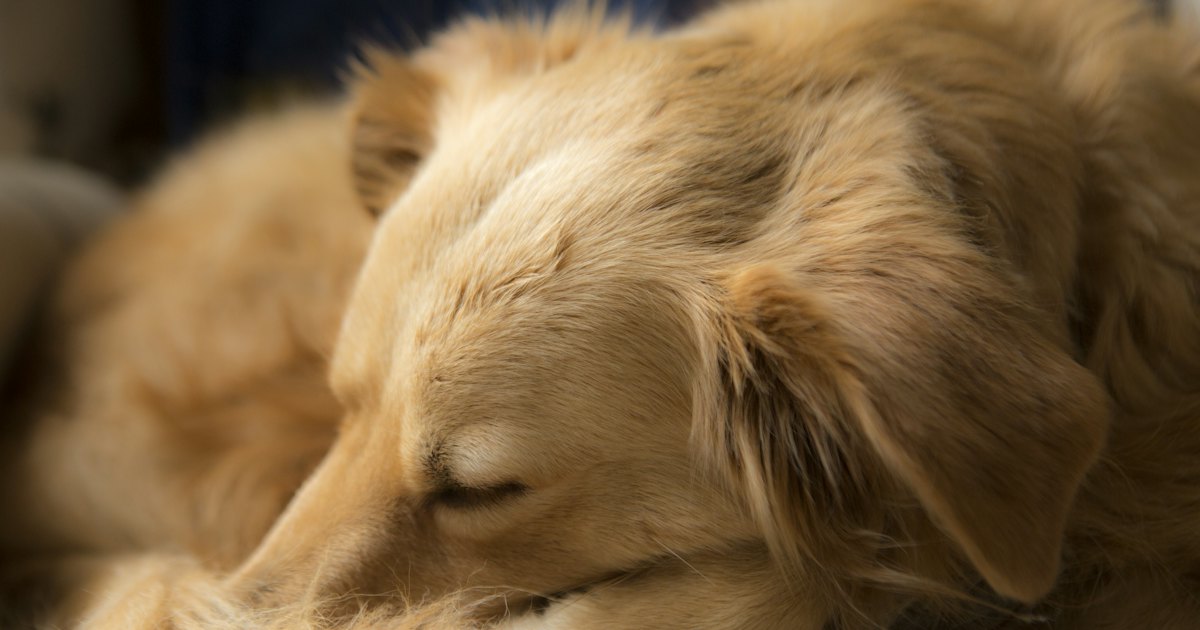
Dog sleeping body language tells you how relaxed or alert your dog really is. A curled-up ball means she feels exposed. She wants to stay small and warm. A loose side-sprawl, legs out and belly open, signals deep trust. Twitching paws usually mean dreaming, not pain. Growling or whimpering during sleep is almost always normal too.
On this page
Watching a dog sleep is one of the more useful ways to learn her normal baseline. You see the full range, from a tight, defensive curl to a sprawled-out flop. There's none of the excitement that usually masks how she feels during the day. Once you know what typical looks like for your own dog, a change in sleep position or sound stands out fast.
Dog Translator
What if you answered
in his own language?
Dog Translator turns what you say into barks and meows on your iPhone.
Dog & Cat Translator Pro
5.03+ ratingsFree


The 30-second test
Short on time? Scan these four signals before reading the full breakdown below.
- Loose, sprawled limbs and an exposed belly: relaxed and trusting.
- Tight curl, nose tucked under a paw or tail: cautious or cold.
- Twitching paws, soft whimpers, closed eyes: dreaming, not distress.
- Stiff body, raised head, open eyes while she's 'asleep': not actually relaxed, worth a second look.
Say the word out loud, 'loose' or 'tight', and you train your eye to catch the shift faster the next time.
Method 1: Read the Curled-Up Position
A dog curled into a tight ball, nose near the tail, is doing two things at once. She's conserving body heat. And she's protecting the soft underside — belly, throat, groin — from anything that might show up while she isn't fully alert. It's the default sleep posture for most dogs, especially outdoors or in a new room, and on its own it isn't a stress sign.
Watch the muscles, not just the shape. A curled dog with a loose jaw and slow, even breathing is just comfortable. A curled dog with a tense back, a held tail, or a face that stays tight even in sleep is more guarded. That tension is worth reading alongside a full how to read dog body language guide, since the same signals usually show up while she's awake, too.
Method 2: Read the Side-Sprawl Position
A dog flopped on her side, legs out, belly exposed to the room, is showing real trust. She's chosen to leave her most vulnerable area uncovered, and that only happens when she doesn't expect to need to defend it. A dog who sleeps this way around you specifically, rather than in another room, is comfortable with your presence. That's a level a quick greeting doesn't show.
This is the sleeping cousin of the loose, wiggly body dogs show during play, or the relaxed stance they hold when genuinely happy. If your dog never sleeps this way around you, that isn't a red flag by itself. It's just a pattern worth tracking over weeks, not over one nap.
Method 3: Read Twitching, Paw-Running, and Soft Sounds
Paws that paddle, whiskers that flick, and a tail that gives a few soft thumps during sleep are almost always dreaming. It happens during the deeper stage of sleep and usually passes within a minute or two without the dog waking up.
Here's the one honest limit: twitching and a true seizure can look similar from across the room. No article can reliably tell the two apart for you. The difference that actually matters is whether you can wake her. A dog twitching in a dream wakes up normally when you call her name or touch her gently. A dog having a seizure usually can't be woken, and the movement is stiffer and more rhythmic. Filming one episode on your phone and showing it to a vet is the honest next step, not a guess.
Dog Translator
Still reading the signs?
Next time your dog vocalises, open Dog Translator and tap a reply. Free on iPhone, iOS 16 or newer.
Dog & Cat Translator Pro
5.03+ ratingsFree
Method 4: Listen for Whimpers, Growls, or Barks During Sleep
Soft whimpering during sleep usually tracks with a dream, not pain. It often fades on its own within a few seconds. A low, sustained growl that doesn't stop when you speak is different. So is a bark followed by a body that stays rigid afterward. Those patterns deserve the same attention covered in why is my dog growling, whether she's awake or drifting off.
Curious what your dog's noises would sound like as actual words? Dog & Cat Translator Pro takes a playful angle on that question. You speak a phrase or tap a sound in the free iOS app, and it answers back with a bark or meow built for the moment — a bedtime routine, or a lazy weekend nap. It's entertainment, not a real decoder for the whimper you just heard. Key features sit behind a subscription, and it needs iOS 16 or newer. The App Store listing has the current details.
| Sleep position | What it usually means | When to dig deeper |
|---|---|---|
| Tight curl, nose tucked | Comfort and warmth, or mild caution | Stays tense even once settled |
| Side-sprawl, belly open | Deep trust, fully relaxed | Never happens around you after weeks together |
| Paws twitching, soft sounds | Dreaming | Can't be woken, or body stays rigid |
| Rigid, head up, eyes open | Not actually asleep, resting watch | Happens every time she tries to settle |
When Sleep Signals Need a Second Look
Most of what you'll see during sleep is ordinary. A handful of signals are worth a call to your vet instead of a guess. That list: sleeping far more than usual with no other change, waking up stiff or limping, sudden new growling toward people she knows, or lying so still and tense that she never actually settles. None of these are emergencies by themselves. But they're a pattern worth writing down with dates, not just remembering vaguely.
The same read-the-whole-dog approach works while she's lying down awake. Sleep positions are really just those same signals taken one step further, with the added information of how deep the rest actually is.
Frequently Asked Questions
Why does my dog twitch in her sleep?
Dog twitching in sleep is almost always dreaming, not pain or illness. It happens during the deeper sleep stage, usually lasts under a couple of minutes, and stops on its own. Wake her gently if it looks distressing. A dream-twitch dog wakes up normally, while stiff, rhythmic movement that won't stop with a touch is worth filming for your vet.
Why does my dog sleep curled in a ball?
A dog curls into a ball to hold in body heat and keep the belly, throat, and groin tucked away from anything unexpected. It's the most common default sleep posture and isn't a stress sign by itself. Pair it with a loose jaw and slow breathing, and it's just a comfortable dog staying warm.
Why does my dog growl or bark while sleeping?
Growling or barking during sleep usually comes from the same dream state that causes twitching. It fades within seconds without the dog fully waking. It's only worth a closer look if the sound repeats often, pairs with a rigid body, or continues once she's clearly awake and alert.
What does it mean when a dog sleeps belly-up?
A dog sleeping belly-up, legs out and fully exposed, is showing real trust in the room she's in. She's left her most vulnerable area uncovered, which dogs generally only do when they don't expect to need to defend it. It's one of the clearest relaxed signals you'll see.
Is it bad to wake a dog from a bad dream?
Waking a dog from a bad dream isn't harmful, but do it gently, with your voice before your hands. A startled dog can snap on reflex before she's fully aware. Say her name softly from a short distance and let her come to you, rather than reaching straight for a twitching dog.