How to Read Dog Body Language When Two Dogs Meet
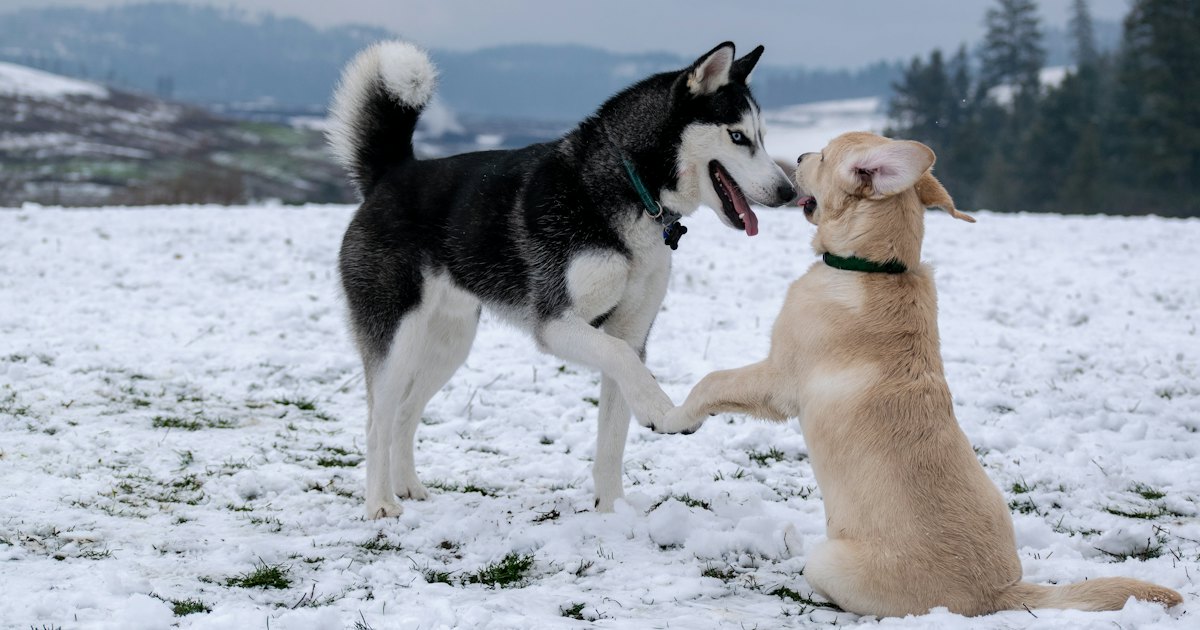
Read a dog greeting by watching the whole body together: the approach, the tail, the ears, and the mouth. No single part tells the full story. A loose, curved approach with a relaxed, wagging tail usually means things are going well. A stiff body, a hard stare, or a tail held low and still means it's time to step in.
On this page
Dog parks and sidewalk meetups make this easy to practice — you see dozens of greetings in one walk. Most tense moments start the same way: a straight, fast approach instead of a curved, easy one. Slowing down those first few seconds changes the mood of everything that follows.
Dog Translator
What if you answered
in his own language?
Dog Translator turns what you say into barks and meows on your iPhone.
Dog & Cat Translator Pro
5.03+ ratingsFree


The 30-Second Test
Short on time? Run this quick read before you let the dogs get close enough to sniff.
- Loose, curved approach with a relaxed, swinging tail: likely a friendly greeting.
- Straight, fast approach with a stiff, raised tail: likely tension building.
- Frozen body, a hard stare, or a low growl: call the dogs apart now.
- One dog turns away or yawns out of context: that dog wants space, not contact.
Naming what you see out loud — "loose" or "stiff" — helps you react before the dogs do.
Method 1: Watch the Approach Before They Ever Touch Noses
Most trouble between two dogs starts before they ever touch. A straight, fast, head-on approach reads as confrontation to most dogs. A loose, curved approach, where both dogs drift in from the side, reads as polite instead.
Leashes change this picture. Some dogs act differently on a leash than they do off-leash. A leash can make a dog feel trapped if things go wrong, according to the American Kennel Club. Give both dogs slack, and always ask the other owner before you let the gap close.
Method 2: Read the First Three Seconds of Contact
Once the dogs are close enough to sniff, watch the first three seconds closely. A quick, mutual sniff at the nose or the side, followed by loose, bouncy movement, is normal dog behavior.
A tail that goes rigid at first contact, or freezes mid-air instead of moving, is worth noting right away. Our guide to dog tail body language breaks down what a frozen tail usually means on its own.
Dog Translator
Still reading the signs?
Next time your dog vocalises, open Dog Translator and tap a reply. Free on iPhone, iOS 16 or newer.
Dog & Cat Translator Pro
5.03+ ratingsFree
Method 3: Watch for Calming Signals During the Greeting
A greeting that's going well tends to show the same handful of signals. Relaxed facial expressions, play bows, fast and wide tail wags, and a wiggling backside all point to a comfortable meeting. That's the pattern the American Kennel Club flags as a good sign.
These calming signals matter even when the dogs already know each other. A dog that play-bows mid-greeting is asking to keep going, not backing off.
Method 4: Know the Warning Signs That Mean You Should Step In
Some signals mean a meeting has gone past curiosity. Yawning out of context, turning the head away, a tense jaw, and a low tail are common warning signs. Shaking and hair standing up along the back are two more. The American Kennel Club lists these together as signs it's time to separate the dogs.
When you see two or more of these together, separate the dogs calmly. Keep walking rather than waiting to see if things settle on their own. Our guide to stressed dog body language covers these same signals in situations beyond greetings, too.
Method 5: Give a Tense Dog Calmer Practice at Home
A dog that tenses up at every new dog isn't a lost cause. It usually just needs calmer, lower-stakes practice between walks. Short, relaxed interactions at home can give the next greeting a calmer start.
Dog Translator won't train your dog or read another dog's signals for you. It plays back breed-specific bark and whimper sounds when you speak or tap. That leaves a few playful minutes to spend together between walks. Pick your dog's breed for a tailored sound profile, then speak a phrase like "let's play" and listen to the response. It's a bonding game, not behavior therapy. A few calm minutes together rarely hurts before the next walk.
Signals at a Glance
| Body Area | Relaxed Greeting | Getting Tense | Time to Separate |
|---|---|---|---|
| Tail | Loose, wagging in a wide arc | High, stiff, and fast | Held low, tucked, or rigid and still |
| Ears | Soft, natural position | Pinned back or locked forward | Pinned flat against the head |
| Mouth & face | Relaxed jaw, soft eyes, maybe a play bow | Tight lips, hard stare, yawning out of context | Lips curled back, teeth showing, growling |
| Whole body | Loose, bouncy, curved approach | Stiff, frozen, weight shifted forward | Hair raised along the back, frantic or frozen stillness |
Frequently Asked Questions
How do you read dog body language when two dogs meet?
Watch the tail, ears, mouth, and whole body together, not just one signal. A loose, wiggly approach with a fast tail wag and a play bow usually means the greeting is going well. A frozen body, a low or rigid tail, and a hard stare mean it's time to separate the dogs before anything escalates.
Why does my dog wag his tail when he sees another dog?
A wagging tail means your dog is aroused, not necessarily friendly — the feeling behind it depends on the rest of the body. A loose, wide wag with relaxed ears and a soft mouth usually signals excitement to play. A high, stiff, fast wag paired with a hard stare can mean tension instead.
Dog Translator
One more thing to try tonight
Read the signal, then answer it. Dog Translator plays a bark or meow back when you speak or tap — free on iPhone, iOS 16 or newer.
Dog & Cat Translator Pro
5.03+ ratingsFree
How do I understand dog body language during an on-leash greeting?
On-leash greetings read differently because the leash limits how far a dog can move away. Watch the same signals — tail, ears, body weight — but give extra weight to tension in the leash and short sniffs with no follow-through. A dog that can't walk away may show stress sooner than it would off-leash.
How do I interpret mixed signals, like a wagging tail with a stiff body?
A wagging tail over a stiff, frozen body is a warning sign, not a friendly one. The tail alone doesn't decide the mood — a fast, high wag over tense shoulders and a hard stare usually means the dog is aroused and unsure. Separate the dogs calmly rather than waiting for the tail to explain the rest.
How long should a first greeting between two dogs last?
Keep a first greeting short: a few seconds of sniffing, then call the dogs apart before either one escalates. Short, repeated introductions over a walk work better than one long standoff. If both dogs stay loose and relaxed, you can let them interact again; if either stiffens, end it there.
What does it mean if a dog's hackles rise when meeting another dog?
Raised hackles — the fur standing up along a dog's back — mean the dog is on high alert. That can mean fear, excitement, or aggression, so the hackles alone don't say which. Read the tail, ears, and mouth alongside them before deciding whether the meeting is still safe to continue.