Can My Dog Sense My Emotions?
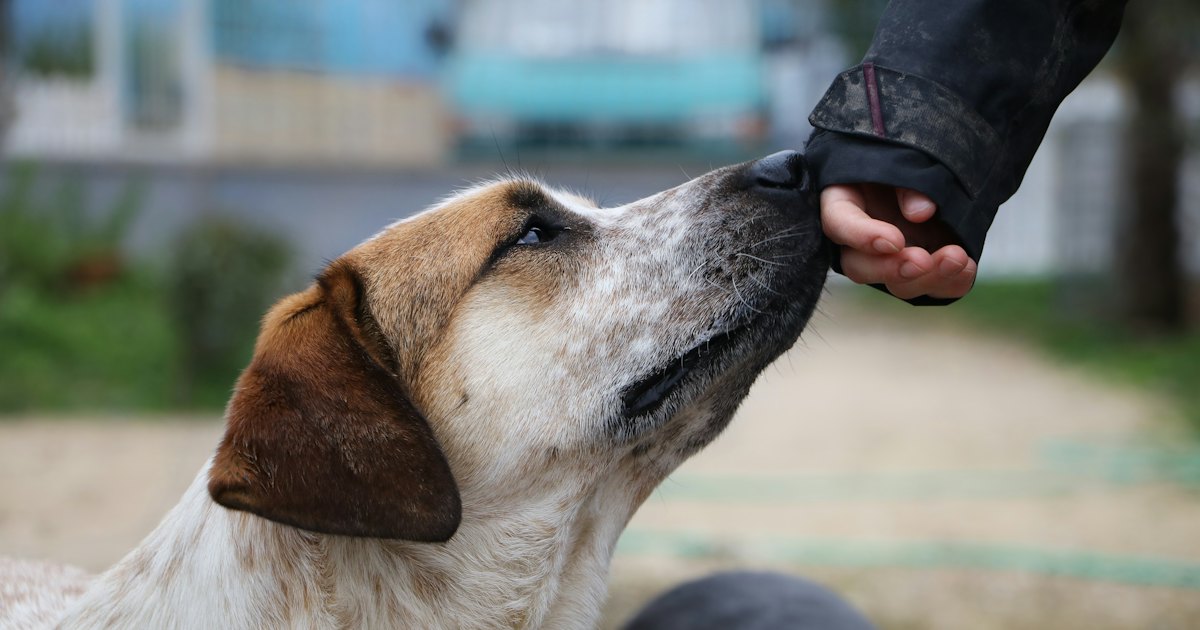
Yes, your dog can sense many of your emotions — just not by reading your mind. Dogs track your tone of voice, posture, and facial tension, then adjust their own behavior to match what they notice. A dog leaning in when you're upset, or backing off when your voice turns sharp, is reacting to those cues, not your feelings.
On this page
In practice, the shift happens fast. A tense jaw or a clipped tone can pull a dog's ears back and drop its tail within seconds, often before any words land. Slow, calm breathing tends to bring the dog back in close. That pattern shows up across breeds and ages, not just in one dog.
Dog Translator
What if you answered
in his own language?
Dog Translator turns what you say into barks and meows on your iPhone.
Dog & Cat Translator Pro
5.03+ ratingsFree


The 30-second test
Short on time? Run this quick check before the methods below.
- Ears pin back or go stiff the moment your voice sharpens.
- Tail drops or stops moving when you raise your tone.
- Your dog leaves the room during a loud argument.
- Your dog leans in closer when you sound upset or tired.
If you saw two or more of these, your dog is likely tuned into your tone more than your actual words.
Method 1: Watch how your dog's body changes when your mood shifts
Start with the parts of your dog you can see from across the room. Ears, tail, and overall posture shift fast when your voice changes pitch or volume.
Our guide on how to read dog body language covers ears, eyes, mouth, and posture together, not just the tail. Reading all four at once is more reliable than any single signal on its own.
The tail alone is easy to misread. A low, slow wag can mean worry just as often as it means calm. Our guide to dog tail body language breaks down that difference before you draw any conclusion.
None of this proves your dog understands sadness the way you do. It is more likely reading your volume and pitch than your actual meaning.
Dog Translator
Still reading the signs?
Next time your dog vocalises, open Dog Translator and tap a reply. Free on iPhone, iOS 16 or newer.
Dog & Cat Translator Pro
5.03+ ratingsFree
Method 2: Check whether your dog mirrors your stress instead of causing it
Dogs living in a tense household often show the same signs their owner does — pacing, panting, or lip licking during a loud moment at home.
Our guide to stressed dog body language lists these signals in detail, including the easy-to-miss ones, like a quick lip lick or a held breath.
Compare that to the same dog during a calm, happy moment. Our guide to happy dog body language gives you the contrast: loose muscles, a relaxed mouth, a steady wag.
Some dogs react this way to any raised voice, not specifically to the emotion behind it. A dog with general anxiety may pace during excitement and during anger alike.
Method 3: Test your voice and tone, not just your words
Your dog's reaction often has more to do with pitch and volume than the words you actually use. You can test that split directly.
Dog & Cat Translator Pro lets you speak into your iPhone and hear your words played back as bark and meow sounds instead of your own voice.
Say the same phrase once in a calm tone and once in a sharp one, then watch how your dog responds to each playback. If the reaction tracks the pitch of the sound rather than the words, your dog is reading tone, not language.
This is a fun way to isolate tone from meaning, not a scientific test. The app is built for entertainment, and it does not decode real barks or diagnose your dog's mood.
Dog Translator
One more thing to try tonight
Read the signal, then answer it. Dog Translator plays a bark or meow back when you speak or tap — free on iPhone, iOS 16 or newer.
Dog & Cat Translator Pro
5.03+ ratingsFree
What your dog is likely responding to (and what it isn't)
Put the three methods together and a pattern shows up. Your dog is responding to how you sound and move, not to the content of what you are thinking.
That does not make the response less real. A dog that calms down when you calm down, or moves closer when your voice softens, is doing something useful for both of you, even without mind-reading.
If your dog growls back during a tense moment, that's a different signal worth reading on its own. See our guide on why dogs growl for what each type usually means.
| What you're doing | What your dog likely notices | Signal type |
|---|---|---|
| Raised, sharp voice | Ears pin back, tail drops | Stress response |
| Tense posture, clenched hands | Keeps more distance, may lip-lick | Stress response |
| Calm voice, slow movement | Loose body, steady wag | Relaxed signal |
| A long sigh or crying | Leans in, stays close | Bonding response |
Frequently Asked Questions
Can a dog feel or sense your emotions?
Yes, in a practical sense. Dogs sense your emotions by reading your tone of voice, posture, and facial tension rather than your inner feelings directly. A sharp, raised voice usually gets a different reaction than a soft, slow one. Your dog is responding to how you sound and move, not interpreting the emotion the way another person would.
How do dogs read human body language?
Dogs read human body language mainly through posture, hand movement, and where your shoulders and eyes point. A stiff stance with crossed arms reads differently than an open, relaxed one. Dogs also track pace — fast, jerky movement signals tension, while slow movement usually reads as calm. Our guide on how to read dog body language breaks this down in more detail.
Can dogs read emotions on your face specifically?
Dogs can notice some facial changes, like a tightened jaw or narrowed eyes, especially in people they already know well. But most dogs rely on your whole body and voice more than your face alone. A calm voice paired with a tense face sends a mixed signal, and most dogs respond to the voice first.
Do dogs feel anger?
Dogs show frustration and arousal in ways that can look like anger — a stiff posture, a hard stare, or a low growl. Whether that counts as the same emotion humans call anger is not something behavior alone can confirm. What is clear is that those warning signals are worth taking seriously regardless of the label you put on them.
Does a dog have feelings?
Many dog owners would say yes, based on everyday behavior like excitement at the door or sulking after a scolding. Dogs clearly have internal states that drive behavior — fear, excitement, calm — even without a way to measure them the same way we measure human emotions. What we can measure is how dogs act, which is why body language stays the most reliable thing to watch.