How to Deal With a Dog Growling and Showing Teeth
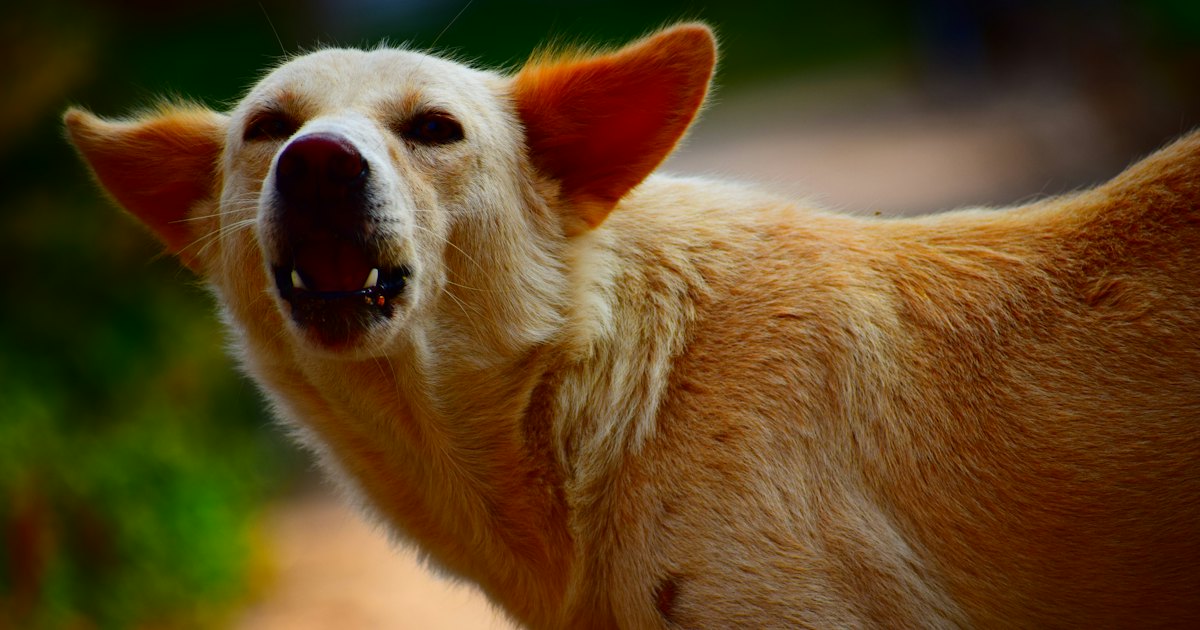
Stop moving, break eye contact, and give the dog room the moment it growls and shows its teeth — that combination is a clear warning, not random noise. Back away slowly instead of reaching toward the dog. Most dogs settle once the threat feels gone; if the growling repeats across days, call a certified trainer or your vet before it escalates.
On this page
In practice, the teeth usually show up before the growl gets loud, not after. A stiff body, a closed mouth that suddenly curls at the lip, and a hard stare are the real early warnings — the growl is just the dog finally saying it out loud. Watching for those signs first, instead of waiting for the sound, gives you a few extra seconds to back off calmly.
If you want the fuller rundown of what each specific growl tone usually means, our guide on why is my dog growling covers that side in more depth. This one focuses on what to actually do in the moment.
Dog Translator
What if you answered
in his own language?
Dog Translator turns what you say into barks and meows on your iPhone.

Dog & Cat Translator Pro
5.03+ ratingsFree


The 30-Second Test: How Serious Is This Growl?
Before you try any of the fixes below, run a quick read on the whole dog. It takes less time than the growl itself.
- Loose body, soft eyes, tail still wagging: likely a play growl — see happy dog body language for the relaxed baseline to compare it against.
- Still body, hard stare, lips pulled back over the teeth: likely a warning — stop and give the dog open space to retreat into.
- Tucked tail, lowered body, teeth bared while backing away: likely fear — don't corner the dog, let it leave.
- Growling while guarding food, a toy, or a person: likely resource guarding — step back instead of reaching for the item.
If today's episode ends calmly, Dog & Cat Translator Pro is a lighthearted way to decompress with your dog afterward — you talk or tap, and it plays back a set of playful bark and meow sounds for your dog to react to. It's built purely for fun, not for reading real growls: it won't tell you whether a growl is a warning or a game. Free to download for iPhone on iOS 16 or newer, with a $9.99-a-year subscription for the full sound set.
Method 1: Read the Whole Body Before You React
A growl rarely shows up alone. Four quick checkpoints — the tail, the ears, the eyes, and the mouth — usually tell you more than the sound does. Check them before you decide whether this is play, fear, or a real warning.
- Tail: loose and wagging usually means play; stiff and high, or tucked low, means tension.
- Ears: forward and relaxed signals interest; pinned flat back signals fear.
- Eyes: soft and blinking is calm; a hard, unblinking stare is a warning.
- Mouth: a loose, open mouth is relaxed; lips pulled back tight over the teeth is not.
For the full breakdown of each signal, see our guide to how to read dog body language and the companion piece on dog tail body language.
This reading gets harder with flat-faced breeds and dogs with docked tails or naturally pointed ears. A Boxer or a Corgi hides some of these cues, so lean harder on the mouth and eyes for those dogs.
Method 2: Stop Moving and Back Away at an Angle
Once you've read a warning growl, the next move is about your own body, not the dog's. Turn sideways instead of facing the dog head-on — a direct, square stance can read as a challenge.
- Avoid direct eye contact; a soft, sideways glance is less confrontational than a stare.
- Step back slowly, one foot at a time, instead of turning and running.
- Give the dog plenty of open space to retreat into, not just space behind you.
- Hold still for a moment before you move again — most dogs settle once the threat feels gone.
This only works if the dog actually has somewhere to retreat to. A dog cornered in a crate, a car seat, or a narrow hallway can't back away either, so open the space up before anything else.
Method 3: Remove Whatever Is Triggering It
A growl almost always points at something specific — a food bowl, a toy, a sore spot, or a stranger reaching too fast. Find that trigger and take it out of the moment instead of trying to out-stubborn the growl.
- Resource guarding: step back from the bowl or toy instead of grabbing it; let the dog finish or walk away on its own.
- Pain: stop touching the exact spot that triggered the growl and book a vet visit rather than testing it again.
- Strangers or handling: end the interaction — a nail trim or a hug from a visitor can both wait.
If the growling keeps showing up alongside other tense signals, our guide to stressed dog body language walks through the wider pattern.
Removing the trigger calms the moment, not the habit. If the same trigger keeps setting the dog off on a repeated basis, that pattern needs more than avoidance.
Once the trigger is gone and your dog has settled, Dog & Cat Translator Pro is a lighthearted way to reconnect — speak or tap, and it answers back in playful bark and meow sounds. It's entertainment, not a way to read the growl itself, and it won't tell you what triggered it. Free to download for iPhone on iOS 16 or newer, with a $9.99-a-year subscription for the full sound set.
Method 4: Reward Calm Instead of Punishing the Growl
In practice, punishing the growl itself can backfire. Yelling, a scruff shake, or an alpha-roll style correction may stop the sound in the moment, but it does not change why the dog felt threatened in the first place.
That gap matters: a dog that learns growling gets punished sometimes stops warning out loud and skips straight to a snap next time. Rewarding the moment the dog chooses to disengage calmly, with a treat or a quiet word, teaches the opposite lesson.
This is a general practice, not a fix for every dog. A growl that happens constantly, across unrelated triggers, usually needs a professional's eyes rather than a reward-timing adjustment at home.
Fix 5: Bring In a Vet or Certified Trainer When It Keeps Happening
Some growling needs more than space and good timing. A sudden new growl in an older dog, growling paired with snapping or lunging, or growling that keeps recurring regularly all point past a one-time fix.
- Book a vet visit first if the growling is new, especially in an older dog — pain is a common and overlooked cause.
- Ask the vet or a certified trainer about the specific trigger pattern you've noticed, not just that the dog growls.
- Avoid trainers who promise a quick fix through punishment; the goal is changing how the dog feels, not just silencing the sound.
For general background on dog behavior beyond growling, ASPCA's overview of common dog behavior issues is a reasonable starting point before you call anyone.
Dog Translator
Still reading the signs?
Next time your dog vocalises, open Dog Translator and tap a reply. Free on iPhone, iOS 16 or newer.
Dog & Cat Translator Pro
5.03+ ratingsFree
Growl Types at a Glance
Here's a quick-reference summary of the growl types covered above.
| Growl type | What you'll see | What to do |
|---|---|---|
| Play growl | Loose, bouncy body; tail still wagging | Keep playing; pause only if the body goes stiff |
| Warning growl | Still body, hard stare, lips pulled back | Stop, turn sideways, give open space |
| Fear growl | Tucked tail, lowered body, retreating | Don't corner the dog; let it move away |
| Resource-guarding growl | Growling over food, a toy, or a bed | Step back; don't reach for the item |
| Pain growl | Growls when touched in one spot | Stop touching that spot; book a vet visit |
Frequently Asked Questions
Is it bad if my dog growls and shows teeth?
A growl with bared teeth is a warning, not automatically bad behavior — it means your dog feels threatened, cornered, or protective of something. The signal itself is normal communication. What matters more is the trigger behind it and how often it repeats. One growl over a stolen sandwich is different from daily growling at the same family member.
Should I punish my dog for growling?
No — punishing the growl itself can backfire. It may stop the sound without changing how threatened the dog feels, so the next warning can disappear and the dog goes straight to a snap or bite instead. Step back, remove the trigger, and address the underlying cause with calm handling or a trainer's help instead of a correction.
What does it mean when a dog bares its teeth without growling?
A silent bared-teeth display is still a warning, just a quieter one — some dogs skip the sound and go straight to the lip curl. Treat it exactly like a growl: back away, give space, and remove whatever triggered it. Dogs that have been punished for growling in the past sometimes learn to drop the sound and keep only the silent signal.
Can a play growl turn into a real fight?
Yes, it can, though it is not the usual outcome. Watch the body, not just the sound: a loose, bouncy dog with a wagging tail is still playing, while a stiff body and a hard stare mean the mood has shifted. Pause the game for a few seconds whenever the body tightens, then let the dog choose to restart.
When should I worry about my dog's growling?
Worry when growling becomes frequent, happens with little warning, or comes with snapping and lunging — that pattern calls for a vet visit first, to rule out pain, and a certified trainer after. A single growl tied to an obvious trigger, like a nail trim or a stolen toy, is usually not an emergency on its own.