What Does Aggressive Dog Body Language Look Like?
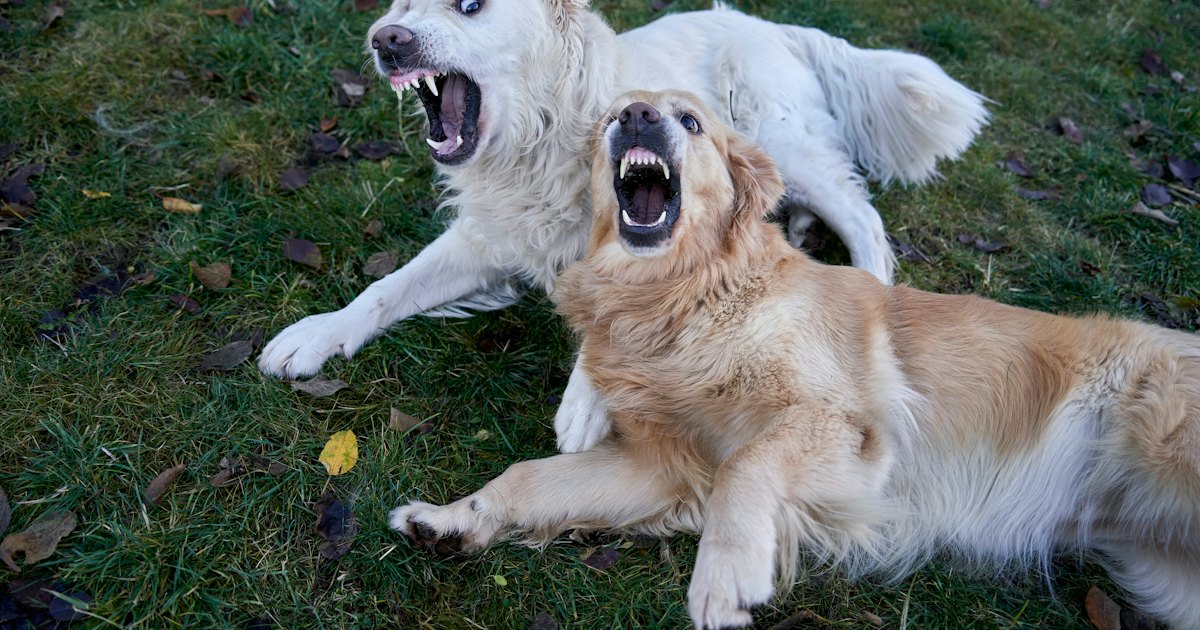
Aggressive dog body language is a stiff, frozen body with a hard stare, raised hackles, and bared teeth. The tail usually sits high and rigid instead of loose and relaxed. These signals rarely show up alone. Watch the ears, eyes, mouth, tail, and posture together before you decide a growl means real trouble.
On this page
I've watched this play out at the dog park more times than I can count. A loose, wiggly dog turns stiff in a second, and the whole group goes quiet before anyone reacts. Catching that freeze early, before the growl, is the real skill. Miss it, and the next sound is a snap, not a bark.
Dog Translator
What if you answered
in his own language?
Dog Translator turns what you say into barks and meows on your iPhone.
Dog & Cat Translator Pro
5.04 ratingsFree


The 30-Second Test
Short on time? Run this check before anything else.
- Body frozen, weight forward, stare locked on: treat it as a clear warning.
- Hackles raised in a ridge down the back, tail high and stiff: back away slowly.
- Lip curled back with a low growl and tense, forward ears: stop what you're doing right now.
- Loose body, soft eyes, relaxed tail: that's not aggression.
Say out loud what you see — "stiff" or "loose" — and you'll catch the shift faster next time.
Reading the dog in front of you takes your eyes, not an app — software can't do this part. Once the tension passes and the dog is calm, that's the time for a lighter kind of back-and-forth. Dog & Cat Translator Pro turns your voice into playful bark and meow sounds it plays back at you. Download it free on iPhones running iOS 16 or newer. The core features sit behind a $9.99-a-year subscription, shown in the App Store before you pay. See exactly what it does on the features page, or go straight to Dog & Cat Translator Pro on the App Store. It's a toy for calm moments, not a way to decode a real growl.
Step 1: Check the Overall Posture
Posture is the fastest signal to read, because it shifts before anything else does. A relaxed dog has a loose, wiggly body, with its weight spread evenly on all four paws.
An aggressive posture looks the opposite. The dog stands tall and stiff, weight shifted forward onto the front paws, almost leaning toward whatever it's facing. Hackles — the strip of fur along the spine and shoulders — often rise into a visible ridge. That's piloerection, and a dog can't control it any more than a person controls goosebumps.
When it won't work: puppies and some small, fine-coated breeds barely raise their hackles, even when tense. Lean harder on the ears, eyes, and mouth for those dogs instead.
Step 2: Read the Ears and Eyes
Ears and eyes move before the rest of the body commits, so they warn you first.
Forward, tense ears rotated toward the target usually signal an offensive threat — the dog is considering moving in. Ears pinned flat back against the skull usually mean fear or defensive aggression instead, a cornered dog rather than a confident one. A hard, unblinking stare held for a couple of seconds is one of the clearest warnings either way.
When it won't work: breeds with heavy drop ears, like Basset Hounds, hide ear position almost completely. Watch the eyes and mouth instead.
Step 3: Watch the Mouth and Tail
The mouth and tail usually confirm what the ears and eyes already told you.
A lip curled up to show the front teeth is a clear, honest warning. Pair it with a low growl or a quiet, closed-mouth stare, and the message gets stronger. A snap without contact — an air bite — is usually the next step up, not a bluff.
The tail tells a similar story. High, stiff, and vibrating at the tip reads as aroused or threatening. Tucked tight under the body usually points to fear-based aggression instead.
This is also where people get fooled. A wagging tail isn't automatically a friendly one. A fast, narrow wag held high and stiff, barely moving at the base, can sit right alongside a growl. Save the big, loose, whole-body wag for a genuinely relaxed dog. For the full breakdown of tail height and speed, see our guide to dog tail body language.
Step 4: Tell Aggression Apart From Fear and Play
Aggression, fear, and rough play can look alike from a distance, and mixing them up is an easy mistake. The table below lines up the same five body parts across all three states, so you can compare them side by side.
| Body part | Offensive aggression | Fear-based aggression | Rough play |
|---|---|---|---|
| Ears | Forward, tense, rotated toward the target | Pinned flat back against the head | Relaxed, swiveling, or briefly back in excitement |
| Tail | High, stiff, fast narrow wag at the tip | Tucked low or clamped between the legs | Loose, wide, whole-body wag |
| Eyes | Hard, unblinking stare held for a couple of seconds | Wide eyes, whale eye with whites showing, looking away | Soft, blinking, relaxed |
| Mouth | Lip curled back, teeth showing, low growl | Lips pulled back in a tense grimace, panting | Open, loose, play-bow bark |
| Posture | Weight forward, body stiff and tall | Body lowered, weight back, trying to retreat | Bouncy and loose, often a play bow |
When it won't work: a dog can be scared and defensive at the same time, mixing signals from more than one column. Treat any mix of warning signs as a reason to give space, not as a puzzle to solve on the spot.
Dog Translator
Still reading the signs?
Next time your dog vocalises, open Dog Translator and tap a reply. Free on iPhone, iOS 16 or newer.
Dog & Cat Translator Pro
5.04 ratingsFree
What to Do When You See These Signs
Seeing one or two of these signals doesn't mean a dog will bite. It means you should change what you're doing before things get worse.
- Stop talking in a high, excited pitch and lower your voice instead.
- Stand sideways rather than facing the dog head-on, and avoid a direct stare.
- Let the dog move away if it wants to — don't follow or reach for it.
- Give it space for a minute or two before trying anything else.
If this is your own dog and the stiff, growling moments keep happening, a certified trainer or your vet is the right next step. An article can tell you what to watch for; it can't examine your specific dog.
Once the tense moment has passed, that's the time for play, not during a stare-down. Dog & Cat Translator Pro turns your voice into bark and meow sounds it plays back at you. It's free to download on iOS 16 or newer, with the core features behind a $9.99-a-year subscription. It's an entertainment toy — it doesn't decode a real growl, and it isn't a substitute for reading the dog yourself.
A low growl on its own, without the other signals above, is its own topic. See our guide to why is my dog growling for what the sound alone does and doesn't tell you.
Frequently Asked Questions
How can you tell if a dog's body language is aggressive or just rough play?
Aggression shows a stiff, frozen body and a hard stare, while play shows loose, bouncy movement with open-mouthed barking and a relaxed face. Play also includes a play bow — front end down, rear end up — which aggression never does. If the dog freezes for more than a second or two, treat it as a warning, not a game.
Why does my dog wag his tail when he sees me but growl at a stranger?
Your dog wags because seeing you triggers excited, friendly arousal, and a loose, wide wag like that is the clearest sign of it. The same dog can still hold its tail high and stiff around a stranger, because tail meaning depends on context, not the wag alone. Height and stiffness matter more than whether the tail is moving at all.
How do you read dog body language overall?
You read dog body language by scanning the ears, eyes, mouth, tail, and posture together, not any single part on its own. No one signal tells the whole story, and the situation the dog is in always matters too. Our full walkthrough in how to read dog body language covers all five areas step by step.
How do you understand dog body language in a dog that isn't your own?
You understand a strange dog's body language the same way you read your own: check posture, tail height, ears, and eyes before you approach. Move slowly, avoid a direct stare, and let the dog come to you if it wants to. A dog you don't know deserves more caution than one you've lived with for years.
How do you interpret dog body language quickly, in the moment?
Interpret dog body language quickly by running the 30-second test above: posture, hackles, mouth, and tail, in that order. Stiff and forward beats loose and relaxed every time as the signal to trust first. Practice on a calm dog you know well, and the fast read gets easier.
What is the first sign a dog is about to bite?
The earliest sign is usually a frozen, stiff body with a hard stare, not the growl or the bite itself. Lip lifting and a closed, tense mouth often follow next, right before a snap. Treat the freeze as your cue to back away, well before any sound happens.